Southeast CRE Market Insights: Stabilization, Top Metros, and 2026 Outlook
The Southeast commercial real estate market has reached a critical inflection point in the first quarter of 2026. Following a period of price discovery and capital market volatility, the region is seeing renewed liquidity, normalizing valuations, and a strategic influx of institutional capital. For high-net-worth investors and property owners with assets exceeding $5 million, the current climate presents unique opportunities to optimize portfolios.
Market Overview
The broader macroeconomic backdrop for commercial real estate in 2026 is increasingly constructive. Nationally, commercial real estate investment activity is forecast to increase by 16% this year to reach $562 billion, effectively mirroring pre-pandemic averages (CBRE). While national U.S. GDP growth is expected to moderate to 2.0% in 2026, the Southeast continues to benefit from outsized demographic tailwinds.
According to recent U.S. Census Bureau data, the South remained the fastest-growing region in the country between July 2024 and July 2025. Although the growth rate normalized to 0.9% from 1.4% in the prior annual period, it continues to lead the nation, underpinning demand for real estate across all major asset classes (U.S. Census Bureau).
Considering selling your commercial property? Get a free confidential property valuation from our investment team →
Key Trends
Cap Rates and Capital Markets
After multiple quarters of upward pressure, valuations are stabilizing. Cap rates leveled off across most major commercial property types in the second half of 2025, signaling that the majority of pricing resets have already occurred. In fact, forecasts suggest cap rates for most property types will compress by 5 to 15 basis points throughout 2026 (CBRE).
This stabilization is supported by reduced volatility in the bond market; the 10-year Treasury yield, which peaked near 4.8% in early 2025, settled into a more predictable 3.9% to 4.2% range by the end of last year (Commercial Property Executive). Improved debt availability and higher loan-to-value ratios are giving sponsors the execution certainty needed to transact.
Top Southeast Metros Command Capital
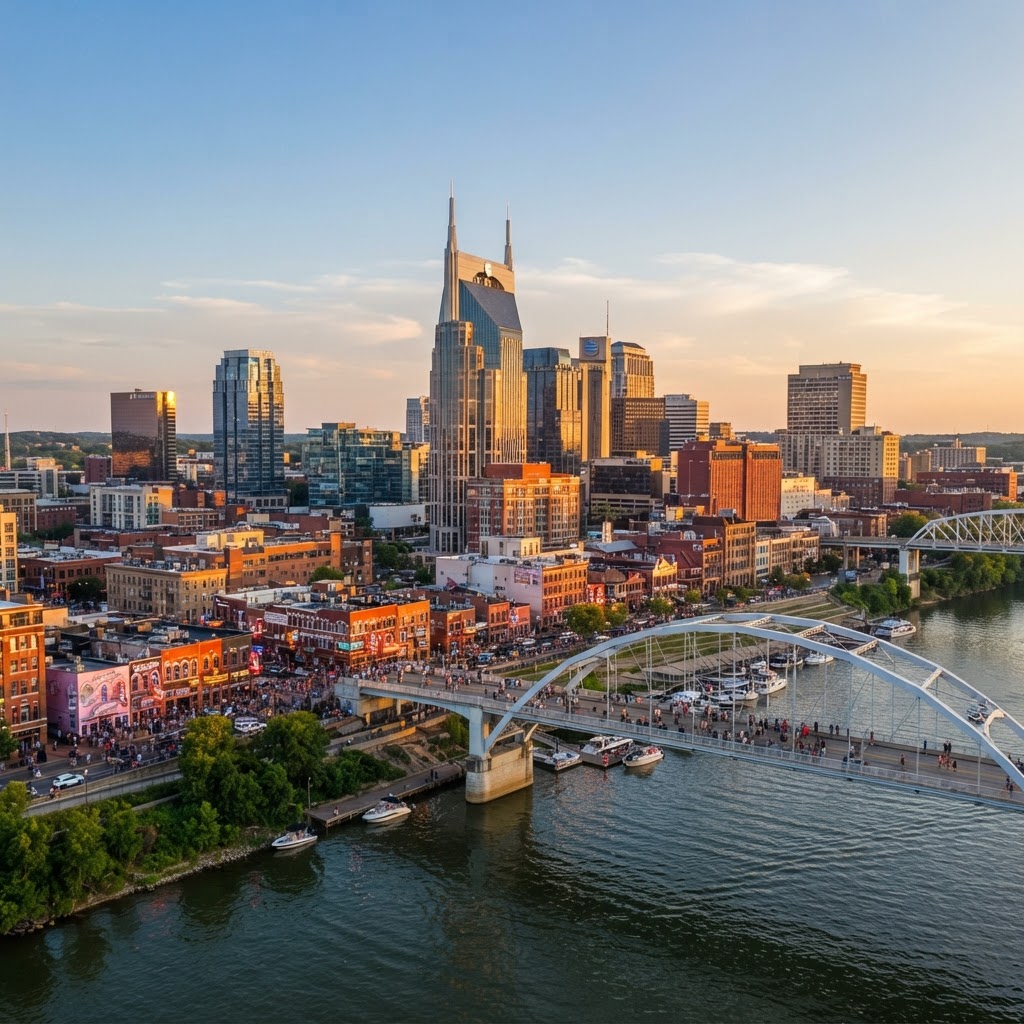
Sun Belt markets remain the primary targets for commercial real estate capital. In the newly released "Emerging Trends in Real Estate 2026" report by PwC and the Urban Land Institute (ULI), Southeast markets dominated the top 10 cities to watch. Miami secured the #3 spot nationally, followed closely by Nashville at #6, and Tampa-St. Petersburg at #8 (Urban Land Institute). These markets are favored for their combination of robust population growth, business migration, and resilient economic fundamentals.
Industrial Supply Adjustments
The Southeast industrial market is experiencing a healthy rebalancing. Construction pipelines have contracted significantly due to elevated financing and material costs, easing the risk of oversupply. In Metro Atlanta, for example, developers delivered just 777,545 square feet of new industrial space in Q4 2025—the lowest quarterly total in over 11 years. This pullback in new supply allowed the overall vacancy rate in Atlanta to decline by 20 basis points to 9.0%, accompanied by 3.1 million square feet of net absorption during the quarter (Partners Real Estate).
Investment Opportunities
Data Centers: The #1 Asset Class
Driven by the explosive growth of artificial intelligence and cloud computing, data centers have emerged as the highest-ranked property sector for 2026 (ULI/PwC). National vacancies sit below 2%, and constrained power capacity is keeping rents elevated. Investors with access to powered sites in major Southeast logistics and tech hubs are positioned for substantial upside.
Retail Resilience
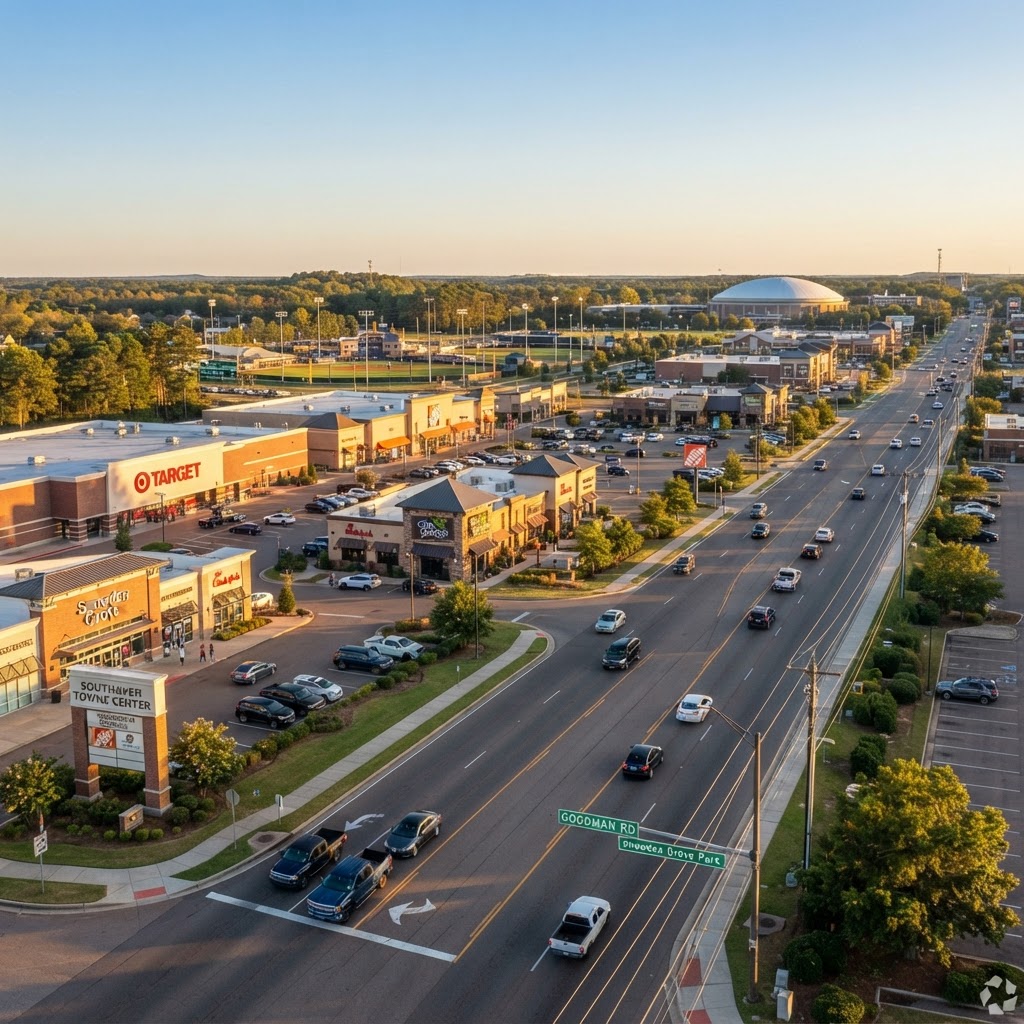
The retail sector is entering 2026 on exceptionally firm footing. The U.S. retail real estate market closed 2025 with vacancies near historic lows and positive net absorption returning in the second half of the year (JLL). The lack of new retail construction over the past decade has given landlords tremendous pricing power, especially in grocery-anchored, neighborhood, and service-oriented centers situated in growing Southeast submarkets.
Looking to acquire investment-grade properties in Southeast Region? Tell us your acquisition criteria and we'll match you with off-market opportunities →
Notable Developments & Transactions
The return of institutional capital is evident in recent marquee transactions across the Southeast:
- Atlanta Data Center Acquisition: In Q4 2025, GI Partners acquired a fully occupied, 15.2-megawatt data center located at 4905 North Point Parkway in the Atlanta metro area from Principal Real Estate Investors. The asset traded for a staggering $253.0 million, underscoring the intense demand for digital infrastructure (Partners Real Estate).
- Atlanta Industrial Volume: The Metro Atlanta industrial sector saw investor demand push average sale prices to an all-time high of $146.49 per square foot in Q4 2025, with total quarterly sales volume exceeding $1.5 billion. Average cap rates in this sub-sector expanded slightly by 40 basis points to 7.3% before the year-end stabilization (Partners Real Estate).
Outlook
As we move deeper into Q1 2026, the fog of economic uncertainty that characterized much of the last two years is lifting. Debt is becoming more accretive, cap rates are poised for minor compression, and Southeast demographic trends continue to insulate the region from broader macroeconomic headwinds. Success in this cycle will rely heavily on asset selection, with a clear "flight to quality" benefiting prime industrial, resilient retail, and digital infrastructure assets.
Ready to discuss your investment strategy? Contact our team for a confidential consultation. Call (662) 265-3633 or schedule a meeting →
Sources:
- CBRE: U.S. Real Estate Market Outlook 2026 & Cap Rates Hold Steady Across Major CRE Sectors
- PwC / Urban Land Institute (ULI): Emerging Trends in Real Estate 2026
- Partners Real Estate: Atlanta Industrial Q4 2025
- JLL: United States Retail Market Dynamics Q4 2025
- U.S. Census Bureau: Vintage 2025 Population Estimates